All projects
4 min read
Services for mums on Diia: two government payments online
Ministry of Digital Transformation

Services for mums on Diia: two government payments online

DiiaGovTechUX/UISocial benefitsBusiness analysisRegistry integrations

About the project

Financial assistance services for uninsured pregnant women and mothers of children under 1 year old. Tens of thousands of users were eagerly awaiting the digitalization of these services, and the services also had to be as automated as possible.


Goal for both services: to let applicants submit an application fully online, without visiting Pension Fund of Ukraine offices or an Administrative Services Center.

Services

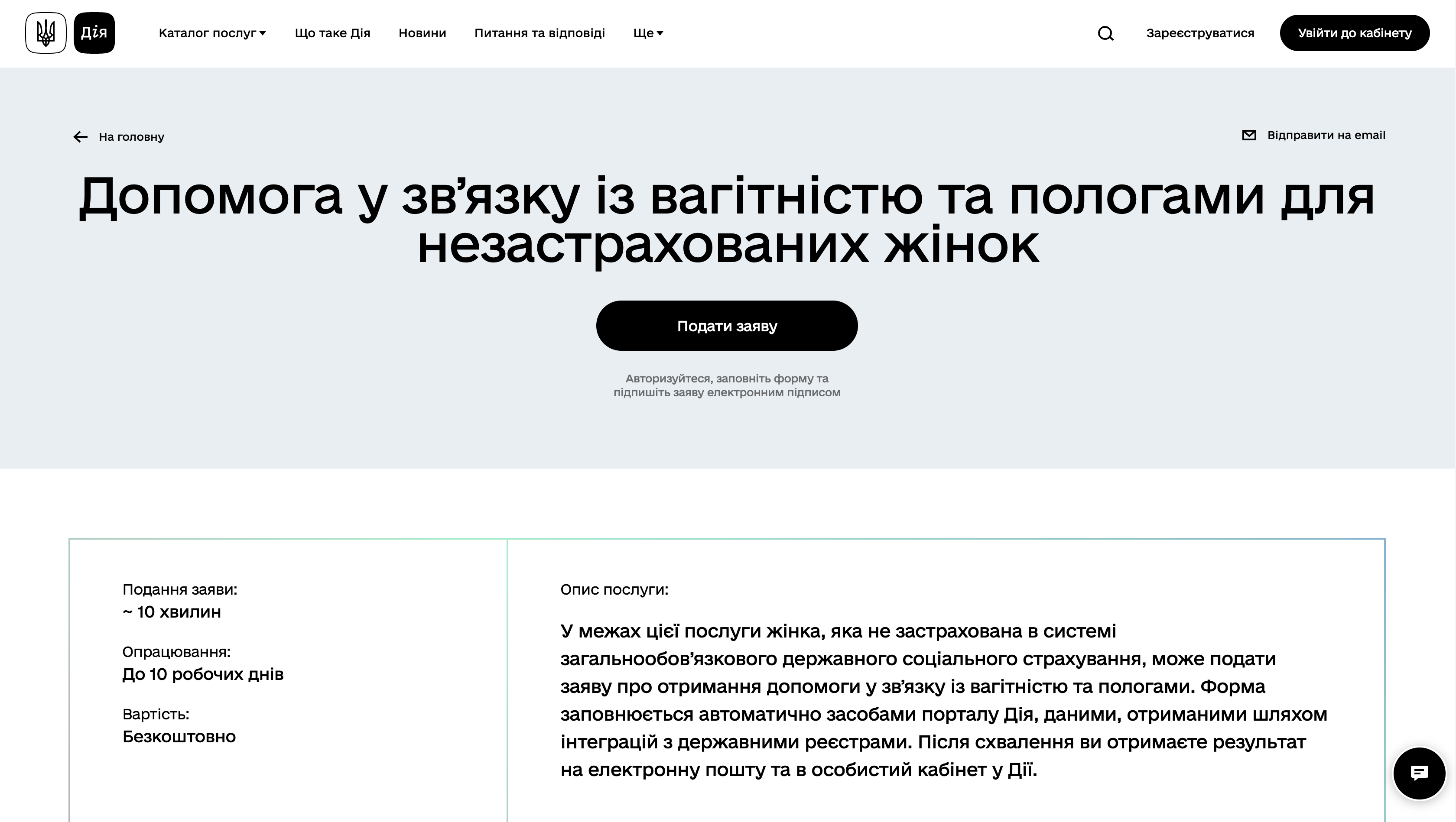
“Pregnancy and Childbirth Benefit for Uninsured Women” — a one-time payment for pregnant women or for women after childbirth who have no insurance.


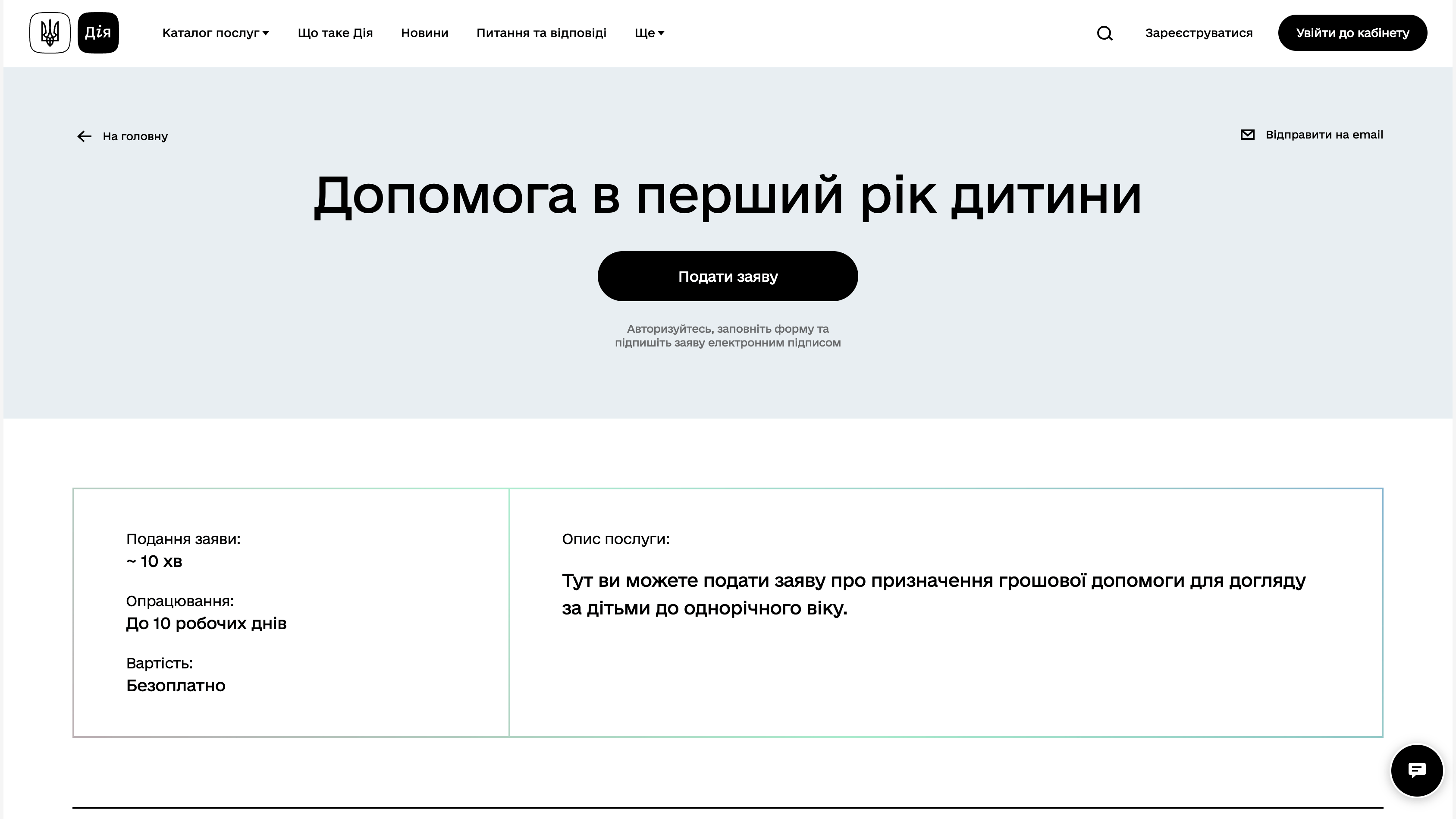
“Child’s First Year Benefit” — a monthly benefit for child care until the child reaches one year of age.

See what Diia says about the services

Where to get them

Both services are available on the Diia Portal

The problem

Pregnant women and mothers of newborns have to stand in lines at offices with paper documents to claim financial assistance for themselves or their child.

That is why both services were built on the following principles:

  • Minimum of questions and pages
  • Autofill of data from 7 registries
  • Users enter only the data that no registry holds
  • Asynchronous interaction with the Unified Information System of the Social Sphere

What we did

for both services

After an application is submitted, users can rate the service in a short survey.
Analytics are also collected: how many applications were started, submitted, and processed, and how long this takes.

Integrations

Interaction with 6 systems takes place to retrieve or verify personal data for the “Pregnancy and Childbirth Benefit for Uninsured Women” service, and with 7 systems for the “Child’s First Year Benefit” service. Asynchronous interaction with the Unified Information System of the Social Sphere is implemented separately, to retrieve personal information, confirm the presence or absence of previous applications, and send the final application as a request. Among these systems: the State Register of Individuals, the Unified State Demographic Register, the Unified Information System of the Social Sphere, the Electronic Health System, the State Register of Civil Status Acts of Citizens, and the Departmental Information System of the State Migration Service of Ukraine.

Technologies

LiquioLiquio (low-code platform)
Used for:
building the algorithm and steps for submitting applications
Node.jsNode.js
ReactReact
PostgreSQLPostgreSQL
Express.jsExpress.js

User convenience

Explanations instead of dead ends

If an application cannot be submitted, the system does not just show an error — it explains why and what to do next. For example, if a medical certificate in eHealth has the status “Entered in error,” the system advises contacting the healthcare facility. If the child has already turned one and more than 6 months have passed, it explains that the application deadline has expired. If data in the registries does not match, it indicates where to update it (an Administrative Services Center or the tax office).

Two-step application

In both services, the system first checks eligibility for the payment through the Unified Information System of the Social Sphere and opens the form only after confirmation. That way, users do not fill in a long application only to be refused at the end. The eligibility check happens at the start, and if the conditions are not met, the system immediately explains the reason for the refusal or for the error during submission.

Examples of error messages for both services

У Реєстрі медичних висновків не знайдено висновку за категорією «Вагітність та пологи». Зверніться до вашого медичного закладу для уточнення інформаціїПослуга недоступна. Ви вже отримуєте допомогу по дитині/дітям або маєте подані заяви

Challenges

Dates that broke payments

In the system that stores medical certificates of temporary incapacity, dates are recorded in the international UTC format, but Ukraine lives on Kyiv time — and the difference between them is 2 hours in winter and 3 in summer. Because of this, the system could count the duration of temporary incapacity as 1 day shorter or longer than it really was, and refuse payment to a user whose paperwork was all in order. This edge case was found before release, and the logic was fixed so that the system always counts dates in Kyiv time, regardless of the season.

Complex cases

Edge cases in the service for children under 1 year old

Complex cases were modeled as early as the analysis stage: a child’s age at the 1-year boundary, twins and triplets, matching a medical certificate to a specific child, and a child with a disability. This made it possible to avoid a significant share of rework at later stages.

Several children are not a duplicate application

If a mother has had twins, each child has their own medical certificate. The system has to verify that the certificate refers to exactly the child the application is submitted for — and not mix the children up or reject the application as a duplicate. These scenarios were modeled at the analysis stage, and the verification logic matches each child individually against the data in their birth certificate.

Trust rating in reviews

“The GoodWare development team has deep expertise in finding technical solutions to the tasks at hand, including when partners’ requirements keep changing. They are willing to meet us halfway, listen and suggest better options. When blockers come up, they flag them and look for the best solution together with us.”

“The team truly cares about the project, spots potential issues on its own and builds in solutions for them.”

Take the project with you

Take the project with you

Save this material as a convenient PDF
to reread it or share it with your team

Summary

The project showed what the digitalization of social services looks like when business logic is complex and the application flow is simple. Payments that look similar have entirely different rules, and it is the detailed analysis of the regulations and edge cases that determines how smoothly the form works for users.


Both services are already available on the Diia Portal. For a woman who has just given birth or is expecting, this means no gathering of paperwork, no trip to an office, and no standing in line — an application can be submitted from a phone in a few minutes while the baby sleeps.

Was this article helpful?

Turn ideas
and complex challenges
into working solutions

Discuss your product’s challenges directly
with our team of experts.


Leave your contact details and a short question — we’ll get back to you with concrete next steps.

More projects and articles

Digital solutions already working for people. Every case is a story of turning complex processes into simple, clear services

Coming soon
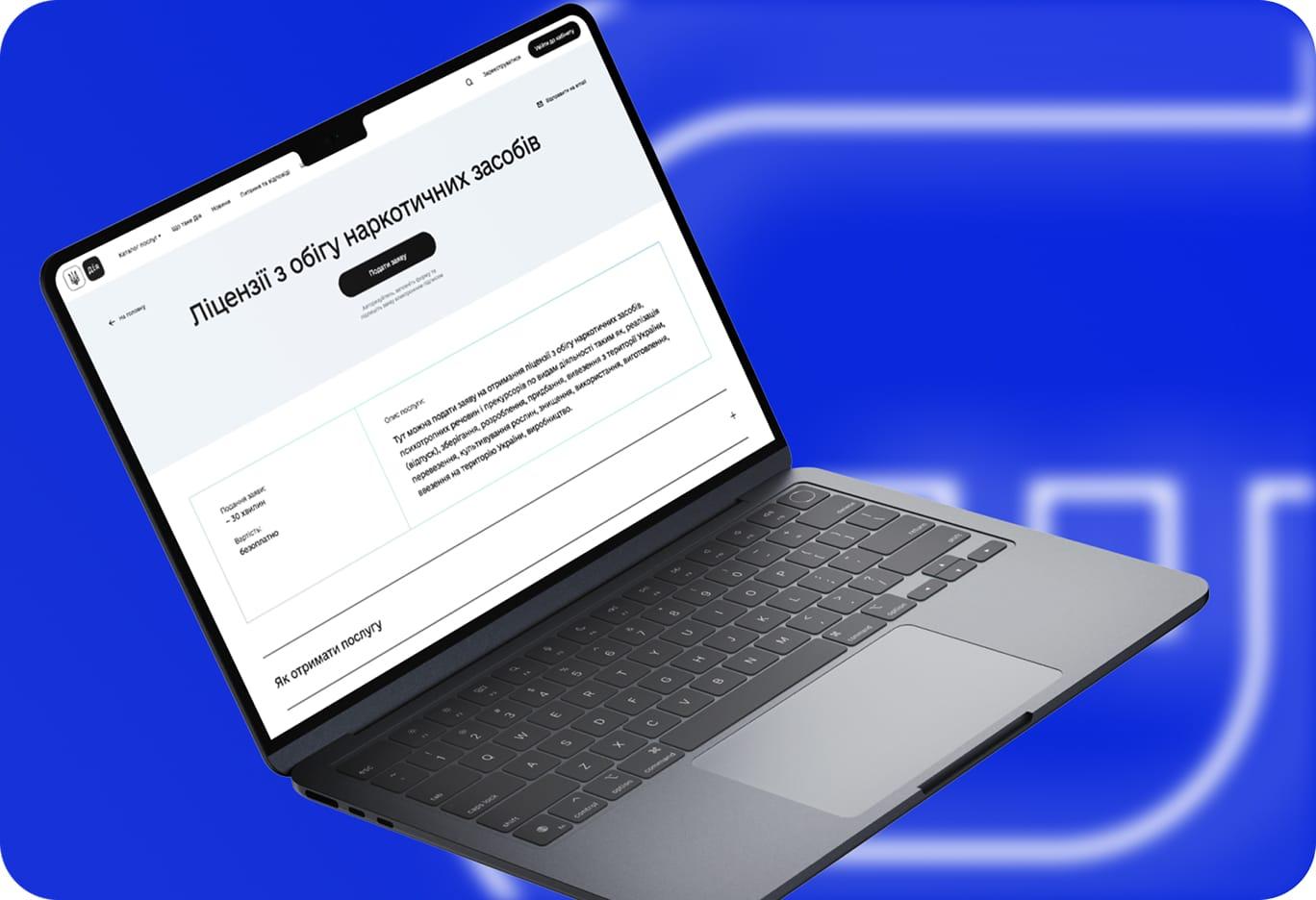
Narcotic drug licensing in Diia

Narcotic drug licensing in Diia

AnalysisDevelopment
Coming soon
Building the “Heroes of the Districts” crowdfunding platform

Building the “Heroes of the Districts” crowdfunding platform

DesignDevelopment
Coming soon
EcoSystem: greenhouse gas emissions control

EcoSystem: greenhouse gas emissions control

AnalysisDevelopment
Coming soon
NGO registration in Diia

NGO registration in Diia

AnalysisDevelopment
Coming soon
Services for everyone: why WCAG is becoming mandatory for Ukrainian digital services

Services for everyone: why WCAG is becoming mandatory for Ukrainian digital services

WCAGInclusivity
Coming soon
Preschool education licensing in Diia

Preschool education licensing in Diia

AnalysisUX design
Coming soon
Marriage application in Diia

Marriage application in Diia

AnalysisUX designDevelopment